 cloutaro
Facebook marketing in 2026: what actually moves the needle
Reach, Reels, groups, ad structure, consent and measurement. What actually moves the needle on Facebook in 2026.

Facebook is not one surface. Your Page, your group, the Reels tab and your ad account behave nothing like each other, yet most businesses treat it all as one channel: post something, hope people see it. That is where the hours go.
This piece walks through what actually decides the outcome. Why the follower count is not distribution, what the video change means in practice, what a group does that a Page cannot, the smallest ad setup that gives usable numbers, and what the rules expect on consent and disclosure. We sell Facebook followers, likes and views, so the commercial part sits in its own section near the end instead of being buried in the advice.
Your follower count is not distribution
A meaningful share of what people see in the feed comes from accounts they do not follow. Meta itself publishes the split in the Widely Viewed Content Report, but that report covers only the US feed, so treat it as directional, not as a figure you can quote: recommended content from unconnected accounts makes up a large share of views, and your follower list does not decide whether a post is shown.
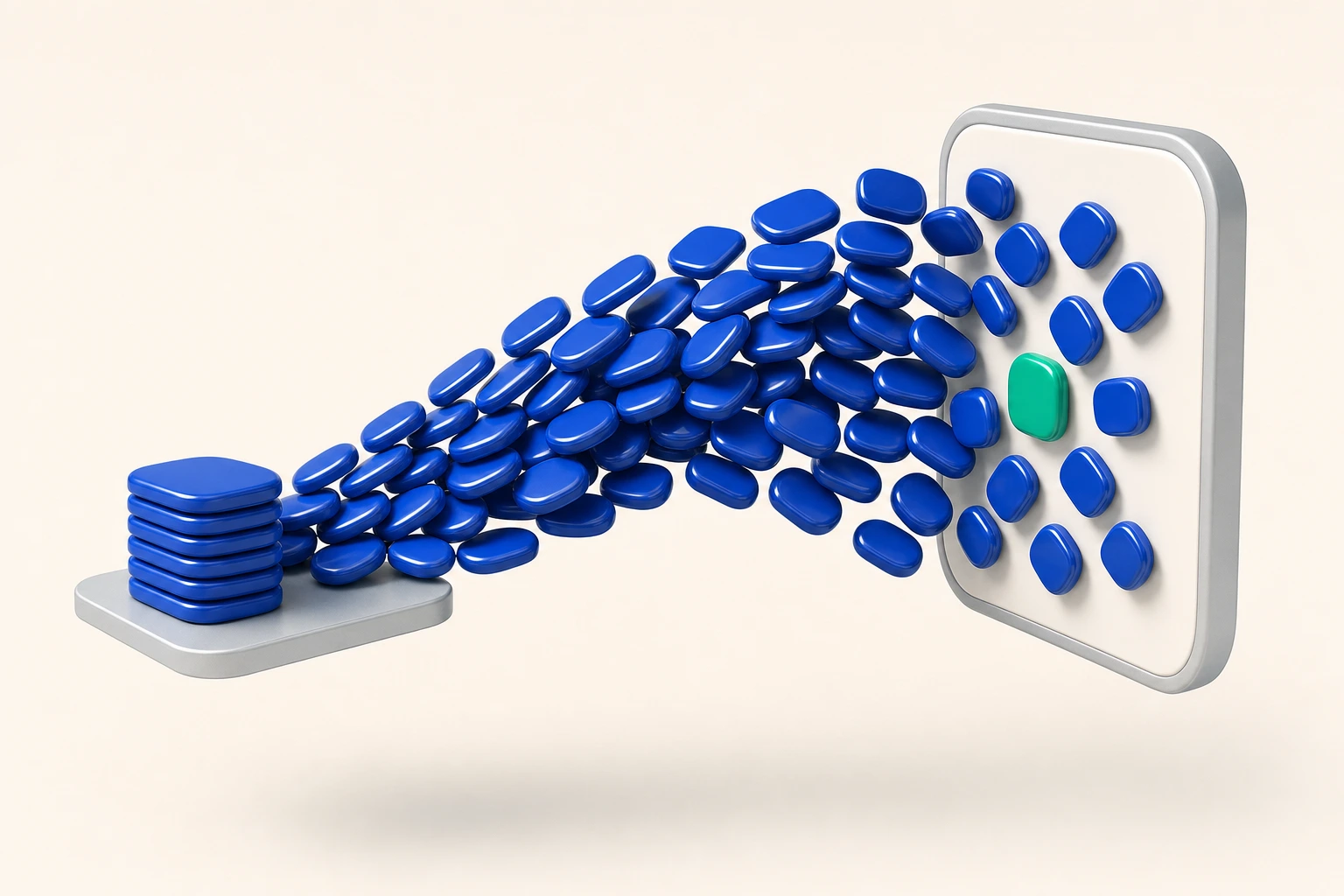
In practice, 4,000 followers is not 4,000 views. It is a list of people who once said they were interested.
Check which kind of account you are actually running, too. A Page and a personal profile have different tools, and a personal profile needs professional mode switched on before it shows you any analytics at all. Read your reach per post over a few weeks. Your own numbers beat any industry average in an agency deck.
Every video on Facebook is now a Reel
In June 2025 Meta announced that all new Facebook videos are posted as Reels, that the video tab became the Reels tab, and that the 90-second length limit was gone. The rollout has been gradual ever since. Old videos were left alone, and the metrics were merged.
The practical upshot is simple. You film vertically because that is the shape the surface is built for. You put the hook in the first second because people swipe. Add captions because plenty of people watch with the sound off. And you no longer pick between two publishing formats because only one flow is left.
How do you market on Facebook without an ad budget?
Set a cadence you can hold in your worst week, not your best. Two posts a week you actually publish beat five a week that dry up by March.
Answer comments and Messenger. A business that replies quickly and sounds like a person gets asked questions. One that does not gets silence.
Use events if you have something happening at a fixed place and time. Use Marketplace if you sell physical goods locally. And write locally: place names, local conditions, the people who actually live near you. Writing about your own town is not the same as writing something worth reading, though. Generic is still generic.
A group does a different job from a Page
A group is not a Page with more people in it. It solves a different problem, and it costs more in work.
| Facebook Page | Facebook group | |
|---|---|---|
| Main use | Shop window, ad foundation, point of contact | Repeat business, feedback, customers talking to each other |
| Real cost | Content | Moderation, every day |
| Suits | Everyone | Anyone with a topic people want to gather around |
You can create or join groups as your Page, and a group can be linked to it. Joining other people's groups is often the cheapest start, provided you contribute instead of pasting links.
Moderation is the real price of a group. Budget for daily attention from day one, or spam bots take over within weeks.
The smallest ad setup that produces usable numbers
The structure has three levels: campaign, ad set, ad. Budget sits at campaign or ad set level. Audience and placement sit on the ad set. Image, video and copy sit on the ad.
Ads Manager currently offers six campaign objectives: Awareness, Traffic, Engagement, Leads, App promotion and Sales. Pick one per campaign, the one you actually want to count. If you want enquiries, Engagement is the wrong choice even though the numbers there look friendlier.
Give the campaign enough budget for Meta to have something to learn from, then leave it alone. A verdict passed after three days is not a verdict; it is noise. Spend your effort on more versions of the ad rather than on ever narrower audiences.
Consent and disclosure are groundwork, not polish
In 2023 Norway's data protection regulator imposed a temporary ban on behavioural advertising on Facebook and Instagram without consent, and the European Data Protection Board made that decision binding across the EU and the EEA. From January 2026 Meta offers users in the EU a less-personalised ads option, following an agreement with the European Commission under the DMA. The direction of travel is toward less personal data being available for targeting.
On your own site, that means the Meta pixel belongs behind your consent banner, not in front of it. If it fires before the visitor has said yes, you have a problem regardless of what Meta does.
Advertising rules across the EU and the EEA also require marketing to be clearly identifiable as marketing. If you pay someone to post about you, you are the advertiser and carry the main responsibility for the label being there, and it belongs in the same language as the content.
Pick three numbers and stick with them
Organic Page analytics live in Meta Business Suite under Insights. Paid lives in Ads Manager. Professional mode has its own dashboard. The three do not count the same way, so do not add them together and call it a total.
Pick three numbers you care about, say enquiries, clicks to the website and new group members, and stay with them for at least a quarter. UTM tags on every link let you reconcile Analytics and Meta when they disagree, and they often do.
Where bought engagement honestly belongs
We sell Facebook likes, followers, views and group members, so here is the unvarnished version: buying engagement changes what the counter says, nothing more. It has no effect on who Facebook shows your content to, and it brings you no customers. Bought engagement breaks Meta's rules on inauthentic behaviour, a risk you take with your eyes open. Counts can also drop back down, so a 30-day refill is included at no extra cost under the terms on the service page, and delivery is staggered rather than dropped in a single block. Prices are public on the service pages: Facebook likes cost $7.75 per 1,000 post likes, and group members cost $8.70 per 1,000. If a bare counter is putting people off, that is the only problem it solves; it is no replacement for the work above.
The order that actually works
First the free blockers: consent banner in place, pixel behind it, UTM tags on links, disclosure where needed. Then video, because that is the format the surface is built around now. Then the group, if you have capacity to moderate it. Paid comes last, once tracking is in place and you know which three numbers you measure against.
Facebook marketing is an order of operations, not a collection of tactics. Most people start at the opposite end, then wonder where the ad budget went.
Buy Facebook Likes
Post likes for the reaction row, page likes if your Page still shows a like count.
Buy nowFrequently asked questions
The follower count does not decide how many people see your posts. A large share of feed views comes from recommended content posted by accounts people do not follow, which makes the follower list more of an interest list than a distribution channel. Look at reach and enquiries per post over a few weeks instead.
About the author

Mira Hoffmann
Head of Operations