cloutaro
Social Media Marketing in 2026: A Strategy You Can Actually Live With
Channel choice, cadence, paid versus organic and three numbers that are enough: a social media strategy a small business can actually sustain.

Social media marketing looks unmanageable from the outside: three platforms, daily trends and advice pointing in every direction. This guide is for anyone running a small business or a channel on their own who needs a social media strategy that survives contact with a normal working week. No theory, no agency speak, just channel choice, cadence, paid versus organic and three numbers that tell you whether any of it is working.
You do not need to be everywhere; you need to be where your customers are
Three questions decide your channel choice, and none of them involves whatever is trending. Who actually buys from you? Where do they already spend their time? And what kind of content can you produce week after week without burning out? A carpenter with local customers will get more out of Facebook and local groups than out of a polished Reels profile. If you sell something visual, food, clothing, crafts, interiors, Instagram is your platform. If you make things people search for, explanations, reviews, tutorials, YouTube is the only place where one video can keep working for you for years. Pick one main channel you run properly and one secondary channel where you repurpose the content. Anything beyond that is pure cost with nothing to show for it as long as you are doing the work alone.
Eight out of ten Norwegians check social media every day, but each platform does a different job
According to Statistics Norway's media survey Norsk mediebarometer 2024, 80 percent of the population uses social media on an average day, spends an average of 1 hour and 53 minutes there, and 57 percent get news from it. The audience is already there. The question is what job each platform should do. Facebook is strongest for local reach, events and the groups where buying decisions actually get discussed. Instagram is the platform for brand building on social media: your visual identity, your products and the people behind them. If you are wondering how to use Instagram in your marketing, start with one format you can manage, not five you hate. YouTube behaves more like a search engine than a feed, and rewards content that answers concrete questions. One channel per job, not the same post pasted into three places.
The feed is no longer built around who you follow
On its earnings call for the first quarter of 2024, Meta said that around 30 percent of the content in the Facebook feed is delivered by the company's AI recommendations, and that more than half of what people see on Instagram is recommended content. Instagram also has no single algorithm: Feed, Stories, Reels and Explore are each ranked separately, according to Instagram's own explanation of its ranking systems. YouTube weighs watch history, what people choose to skip and satisfaction measured through surveys, and according to its own blog it has prioritized satisfaction since 2015. For small accounts this is good news: every post competes on its own response, not on the size of your follower list. We have covered how this plays out in practice in our article on the Facebook algorithm.
Organic builds slowly, paid is rented space, and the order matters
Organic content builds trust and ownership, but it builds slowly. Paid distribution buys speed, but it stops working the second the budget runs out. On a small budget, the order is everything: publish organically first, see what actually gets a response, then put money behind what has already proven itself. Paying to spread a post nobody reacted to is buying more of a no. A small budget behind a post that already landed organically is the cheapest test money can buy. Keep the ads as concrete as the content: one offer, one audience, one goal. We have described a minimal ad setup in the guide to Facebook marketing.
A cadence you keep in March beats a calendar you abandon in February
Most social media marketing strategies do not die of bad ideas. They die of a publishing plan nobody can face by week six. Choose a frequency you can hold for six months: two posts a week you actually publish beat five that collapse. Set aside one fixed production day and batch everything for the week in a single session. Repurpose hard: one good idea becomes a YouTube video, three Instagram clips and a Facebook post with a local angle. Timing matters less than people think, but the pattern in your own numbers does, and we have written about that in the article on the best time to post.
Three numbers are enough: reach, response per reach, and clicks or enquiries
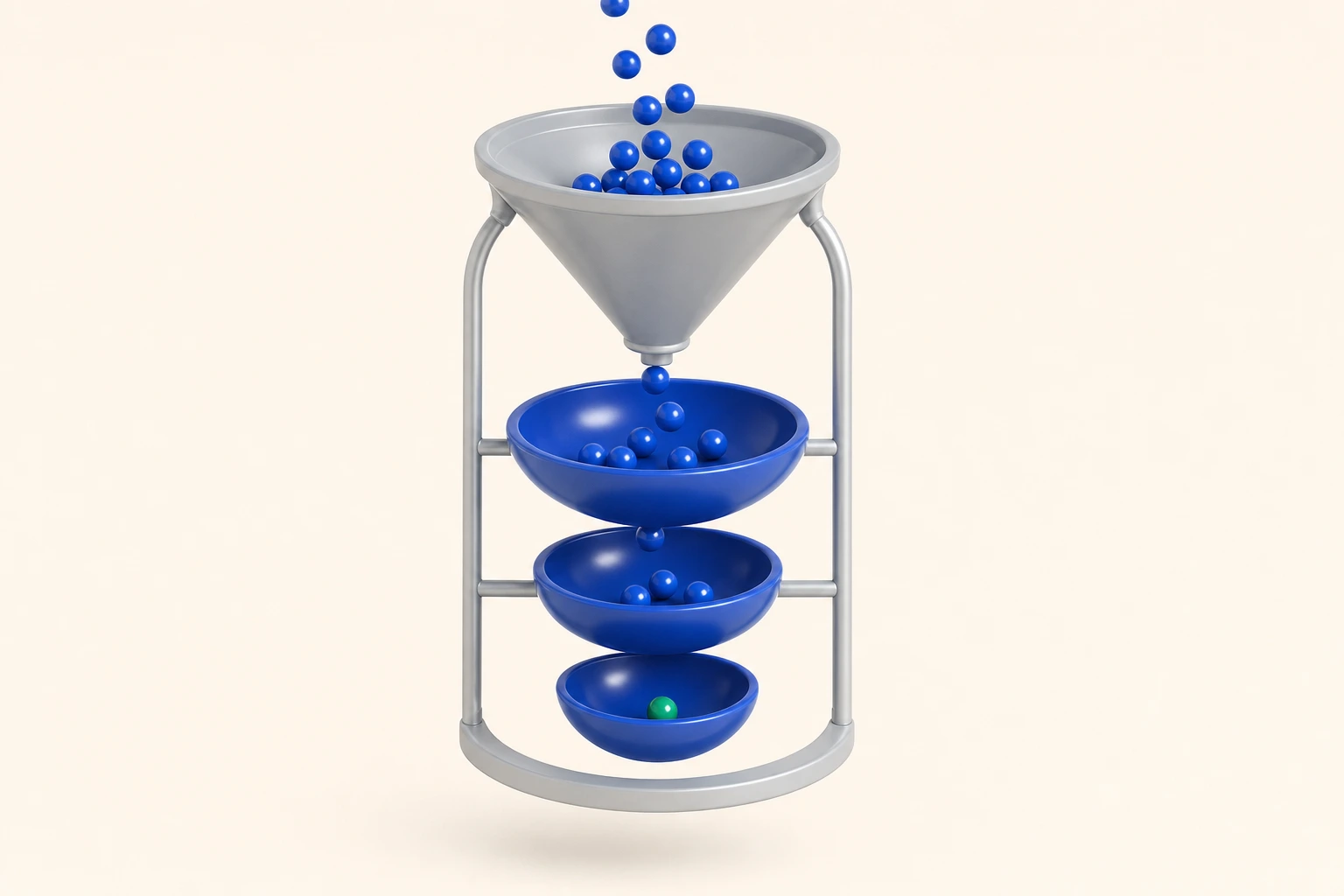
You do not need dashboards. You need three numbers you check once a month.
| Number | Where to find it | What it tells you | What you do |
|---|---|---|---|
| Reach | Meta Business Suite, YouTube Studio | How many people actually saw the content | If it falls over time, change format or topic, not just frequency |
| Response per reach | Reactions, shares or watch time divided by reach | Whether the content lands with the people who see it | Make more of your two best posts, cut the weakest type |
| Clicks or enquiries | Link clicks, messages, calls, orders | Whether the attention turns into anything | If it stays at zero over time, change what you ask people to do |
Reach without response is noise. Response without enquiries is entertainment. Only when all three point the same way is your social media marketing actually doing its job.
Ads must be labeled, even when the account is small
Norwegian law requires marketing to be clearly recognizable as marketing, and the Norwegian Consumer Authority's guidance on labeling ads in social media applies no matter how big your account is. If the content is in Norwegian, the label must be in Norwegian too. The advertiser carries the main responsibility, but whoever publishes the post can be held liable as well. Mark collaborations and paid posts clearly at the top, not buried in a hashtag. It costs nothing and spares you trouble with the regulator.
Where bought numbers belong in a strategy
We sell this ourselves, so here is the unvarnished version. Bought followers and likes change the number shown on your profile, and that is all they do. They do not bring customers, response or better placement in the feed. Bought engagement also breaks Meta's rules on spam and inauthentic behavior along with YouTube's policies against fake engagement, and that is a risk you take with your eyes open: the platforms clean up regularly, and numbers can drop. With us, everything is delivered gradually, and if the number drops within 30 days, we top it up at no extra cost. Prices are listed openly on the service pages for Instagram followers and Facebook likes. Used correctly, this puts a floor under the visible number while you build the real foundation, never a replacement for it.
What a workable week looks like
Monday: one two-hour production session that finishes all the content for the week. Tuesday and Thursday: publish on your main channel. Friday: repurpose on the secondary channel and spend ten minutes answering every comment and message. Last Friday of the month: pull the three numbers, write them into a spreadsheet and make one decision based on them. The order is the point: choose your channel based on your customers, keep a cadence you can sustain, prove the content organically before you pay for distribution, and let three numbers drive the adjustments. That is the whole strategy, and it is one you can live with.
Buy Instagram Followers
Followers in four tiers, priced in the open, with 30-day refill coverage.
Buy nowFrequently asked questions
The one where your customers already spend their time. Local customers and groups point to Facebook, visual products to Instagram, and search-driven content like tutorials and reviews to YouTube. Pick one main channel you can run properly and repurpose the content on one secondary channel.
About the author